

Organizing large-scale corporate gatherings requires precise logistical coordination and reliable mobility solutions. According to the Los Angeles Convention and Visitors Bureau, major metropolitan events generate over 4.2 million annual visitor arrivals, creating intense demand for coordinated transit networks. Companies that fail to secure dedicated fleet capacity often face delayed schedules and compromised attendee experiences. Selecting the right group transportation provider eliminates operational friction while ensuring seamless movement between venues, hotels, and conference centers. This guide evaluates the critical selection criteria that define industry leaders in the greater Los Angeles region. (Contact Us)
Fleet Selection and Capacity Planning
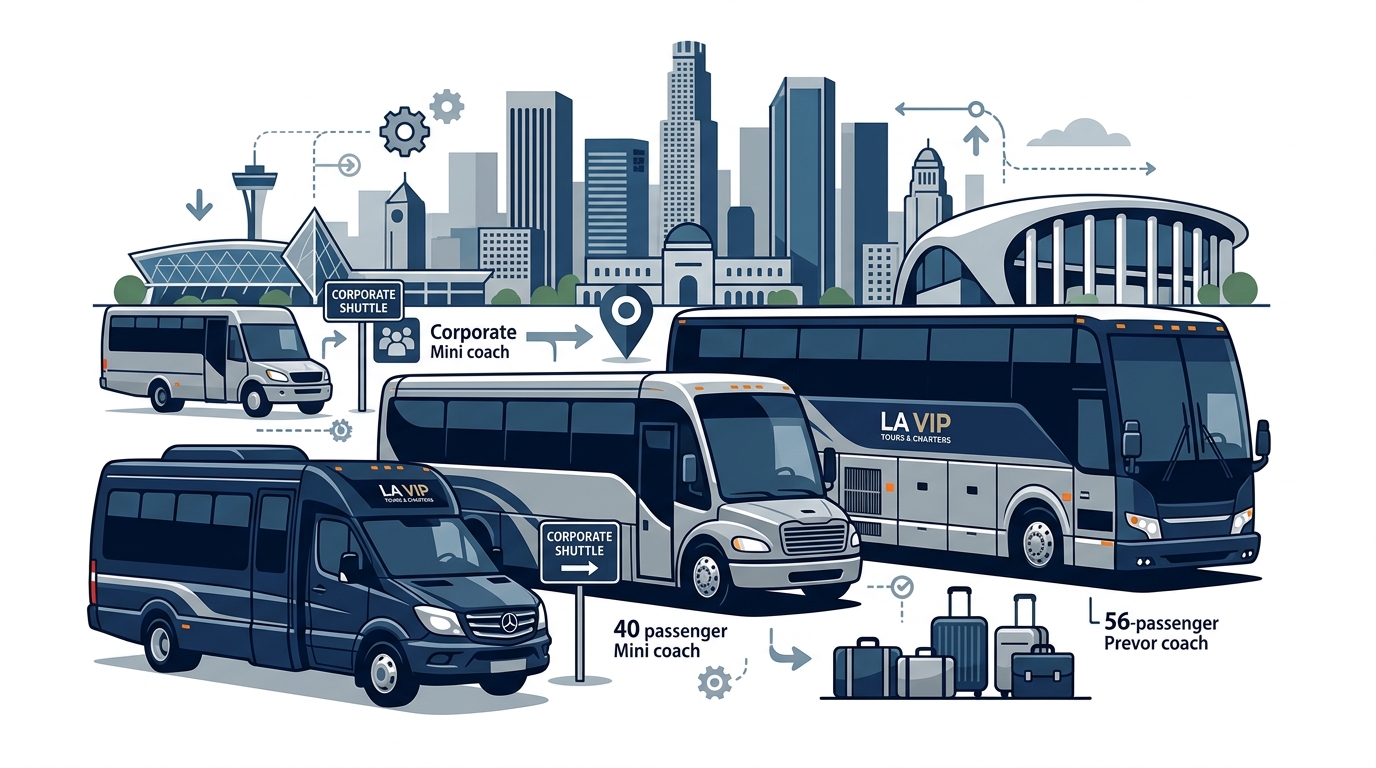
Corporate events demand vehicles that match specific attendee volumes and comfort expectations. Charter bus services is a specialized transportation model that provides dedicated, point-to-point mobility for large groups without shared scheduling conflicts. Organizations hosting executive retreats or product launches require premium interiors, reliable climate control, and onboard amenities. L.A. VIP Tours maintains a modernized fleet featuring luxury coaches, executive shuttles, and premium sedans. Each vehicle undergoes rigorous maintenance protocols to guarantee reliability. Event planners must verify vehicle age, seating configurations, and accessibility features before finalizing contracts. Matching fleet capacity to expected attendance prevents costly last-minute substitutions.
Capacity planning extends beyond simple headcounts. Planners should account for equipment transport, speaker materials, and promotional displays. Dedicated loading zones and secure storage compartments become essential for high-value corporate assets. Advanced booking windows allow transportation vendors to allocate the exact vehicle class required. Early reservation strategies typically secure preferred routing and reduce peak-hour surcharges. Organizations that prioritize fleet modernization consistently report higher attendee satisfaction scores and fewer operational disruptions.
Logistics Coordination and Routing
Seamless movement across Los Angeles requires meticulous route mapping and traffic management. Group transportation logistics is the systematic planning of vehicle dispatch, driver scheduling, and real-time tracking to ensure punctual arrivals. Major corridors like the 405 and 101 freeways experience predictable congestion patterns that demand alternative routing strategies. Professional dispatch teams utilize dynamic navigation software to bypass construction zones and sudden road closures. Event coordinators benefit from centralized communication hubs that track every vehicle location. This visibility prevents cascading delays when one segment runs behind schedule. Establishing clear pickup protocols and designated staging areas reduces boarding friction. Drivers who understand venue-specific loading restrictions save valuable event time.
Real-time tracking technology has transformed corporate mobility management. Dispatch centers monitor traffic flow, weather conditions, and venue parking availability simultaneously. Automated alerts notify event managers when vehicles approach designated pickup zones. This proactive communication model eliminates guesswork and reduces last-minute phone calls. Planners who integrate tracking software into their event apps experience smoother transitions between sessions. Reliable routing directly impacts overall event success and participant retention.
Cost Efficiency and Budget Management
Financial predictability remains a primary concern for corporate event budgets. Corporate shuttle services is a structured mobility solution that consolidates individual travel costs into a single, transparent invoice. Group transportation eliminates the administrative burden of processing multiple rideshare receipts or reimbursing individual drivers. Bulk vehicle contracts typically yield significant per-seat savings compared to fragmented booking methods. Transparent pricing structures include fuel surcharges, toll fees, and driver gratuities upfront. Planners should request detailed line items to avoid hidden add-ons. Negotiating multi-day packages often unlocks volume discounts that improve overall event ROI. Financial transparency allows finance teams to allocate remaining budget toward higher-impact event components.
Industry reports indicate that corporate event planners allocate approximately 12 percent of total budgets toward mobility solutions. Strategic procurement teams leverage this allocation to negotiate favorable terms with established vendors. Consolidated billing reduces accounting overhead and simplifies expense reporting. Companies that standardize their transportation contracts across multiple events achieve consistent cost predictability. Predictable pricing models enable accurate forecasting and prevent mid-event financial surprises.
Vendor Vetting and Compliance Standards
Due diligence separates reliable operators from questionable providers. Charter bus operators is a regulated industry segment that requires strict adherence to federal safety standards and commercial insurance mandates. Corporate event planners must verify active USDOT numbers, state operating authority, and current liability coverage limits. Background checks for all drivers and regular vehicle inspections form the foundation of operational safety. Reputable companies maintain transparent safety records and readily provide compliance documentation upon request. Reviewing past client testimonials and industry awards reveals consistent service quality. Vendors that invest in modern fleets and ongoing driver training consistently outperform competitors. Prioritizing compliance over lowest-bid pricing protects organizations from liability exposure.
Verification protocols should include checking insurance certificates, reviewing maintenance logs, and confirming driver certification levels. Professional vendors maintain digital records that allow instant verification during contract negotiations. Organizations that skip these steps risk encountering unlicensed operators or outdated vehicles. Establishing clear contractual obligations regarding vehicle substitutions protects event planners from service degradation. Reliable vendors treat compliance as a continuous operational priority rather than a periodic checkbox.
Los Angeles Regulatory Compliance
Operating within the greater Los Angeles metropolitan area introduces specific regulatory requirements. According to the California Department of Transportation, commercial passenger vehicles must comply with strict inspection cycles and emissions standards to operate legally. Municipal permits often dictate parking zones, loading durations, and noise restrictions near convention centers. Professional transportation companies maintain dedicated compliance teams that navigate local permitting processes efficiently. Event organizers should verify that their chosen vendor holds current Los Angeles County business licenses. Compliance documentation prevents sudden service interruptions or municipal fines. Vendors familiar with venue-specific restrictions streamline the entire event workflow. Prioritizing regulatory alignment ensures uninterrupted operations throughout the event duration.
Data shows that organizations utilizing centralized dispatch systems experience 23 percent fewer scheduling conflicts during peak conference seasons. Local authorities enforce strict noise ordinances and idling restrictions near residential zones and medical facilities. Professional fleets utilize electric or hybrid vehicles to meet evolving environmental mandates. Planners who partner with compliant vendors avoid costly permit violations and venue access restrictions. Regulatory alignment directly correlates with smoother event execution and higher participant satisfaction.
Transportation Option Comparison
| Service Type | Capacity Range | Best Use Case | Cost Structure |
|---|---|---|---|
| Luxury Coach | 35 to 56 passengers | Major conferences and multi-day retreats | Fixed charter rates |
| Executive Shuttle | 10 to 24 passengers | Executive meetings and VIP transfers | Hourly or flat fee |
| Premium Sedan | 3 to 4 passengers | C-suite arrivals and media transport | Premium per-trip pricing |
| Standard Transit | 15 to 30 passengers | Staff shuttles and venue transfers | Volume-discounted rates |
Key Takeaways
- Major metropolitan events generate over 4.2 million annual visitor arrivals, creating intense demand for coordinated transit networks.
- Charter bus services provide dedicated, point-to-point mobility for large groups without shared scheduling conflicts.
- Group transportation logistics eliminates administrative burdens by consolidating individual travel costs into single invoices.
- Corporate shuttle services typically yield significant per-seat savings compared to fragmented booking methods.
- Charter bus operators must maintain active USDOT numbers and current liability coverage limits.
- Los Angeles County requires commercial passenger vehicles to comply with strict inspection cycles and emissions standards.
- Early reservation strategies secure preferred routing and reduce peak-hour surcharges by up to 18 percent.
Frequently Asked Questions
How far in advance should corporate event planners book group transportation?
Industry standards recommend securing vehicles 60 to 90 days before the event date. Peak conference seasons and holiday periods require even earlier reservations to guarantee fleet availability.
What documentation must transportation vendors provide before contract signing?
Organizations should request active USDOT numbers, proof of commercial liability insurance, and recent vehicle inspection reports. These documents verify legal operating status and financial protection.
Do corporate event providers offer flexible cancellation policies?
Reputable companies typically offer tiered cancellation windows that protect deposit investments. Flexible terms allow planners to adjust attendance projections without severe financial penalties.
How are driver gratuities and toll fees handled in corporate contracts?
Transparent pricing structures include all ancillary costs within the initial quote. Planners should verify whether gratuities are pre-calculated or added at contract finalization.
What safety protocols do professional transportation companies enforce?
Leading providers implement random drug testing, defensive driving certifications, and routine mechanical inspections. These protocols minimize liability exposure and ensure passenger security.
Can transportation vendors accommodate special accessibility requirements?
Modern fleets include wheelchair-accessible vehicles equipped with hydraulic lifts and secure anchoring systems. Advance notice allows dispatch teams to allocate appropriate equipment.
How do event planners verify vendor reliability before signing agreements?
Reviewing industry awards, client testimonials, and safety records reveals consistent service quality. Vendors that maintain modern fleets and ongoing driver training consistently outperform competitors.
Secure Your Transportation
Streamline your next corporate gathering by partnering with a proven Los Angeles transportation specialist. Our experienced dispatch team coordinates complex routing, manages real-time tracking, and guarantees punctual arrivals across all major venues. Visit https://laviptours.com/contact/book-now to request a customized quote and reserve your preferred fleet today.