
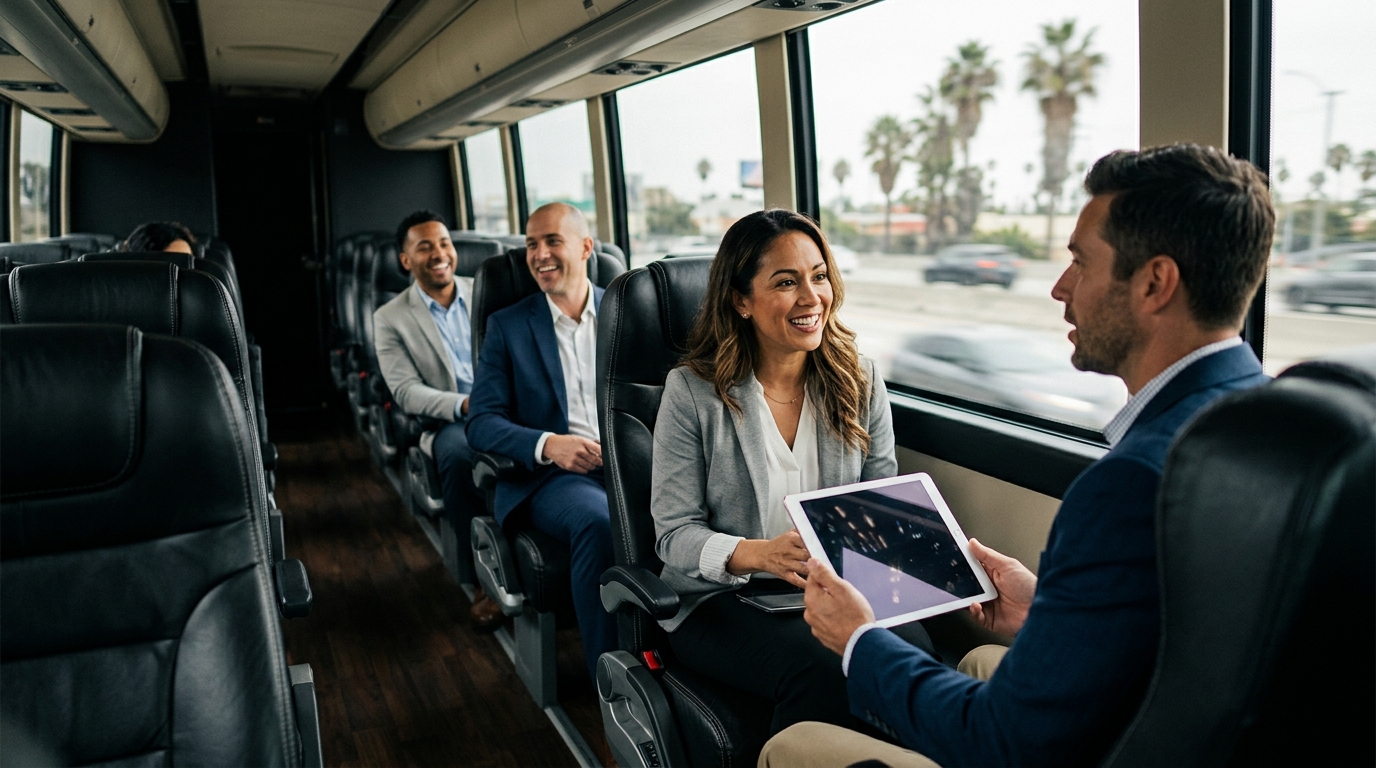
Top Group Transportation Provider for Corporate Events in Los Angeles
Corporate event logistics require precise coordination and reliable vehicle deployment across a sprawling metropolitan region. Recent industry data shows that over sixty percent of enterprise planners prioritize dedicated charter fleets to minimize transit delays and maximize attendee engagement. Organizations that secure a single point of contact for routing, scheduling, and vehicle maintenance consistently report higher satisfaction metrics across multi-day conferences. This operational model eliminates marketplace fragmentation and guarantees direct accountability from dispatch to destination. Companies seeking a proven partner must evaluate fleet diversity, driver certification standards, and regional coverage capacity before finalizing contracts.
Defining Corporate Charter Requirements
Enterprise transportation demands a structured approach to group movement. A charter bus is a commercial passenger vehicle reserved exclusively for a single organization or event group. Planners must align vehicle capacity with attendee counts to avoid overcrowding or unnecessary fleet expansion. Dedicated operators eliminate third-party dispatch delays and provide direct communication channels for schedule adjustments. This direct coordination model reduces administrative overhead and ensures seamless transitions between venues. Organizations that establish clear routing parameters before booking consistently experience fewer logistical disruptions.
Core Operational Priorities
Event coordinators prioritize reliability, comfort, and compliance when selecting a transportation partner. A motor coach is a large commercial vehicle designed for long-distance group travel with enhanced passenger amenities. These vehicles feature climate control, secure luggage compartments, and onboard power distribution. Planners should verify that operators maintain their own fleets rather than subcontracting to independent contractors. Direct fleet ownership guarantees consistent vehicle standards and predictable maintenance schedules. This operational transparency directly impacts attendee experience and corporate reputation.
Fleet Composition and Passenger Capacity
Successful enterprise events require scalable vehicle options that adapt to fluctuating group sizes. Operators that maintain diverse fleets can match specific attendance projections without compromising comfort or budget. A luxury mini bus is a mid-sized commercial vehicle optimized for groups ranging from twenty to forty attendees. These vehicles offer executive seating, panoramic windows, and integrated charging stations for modern devices. Corporate planners frequently deploy these units for executive shuttles, venue transfers, and networking excursions. The compact footprint allows navigation through dense urban corridors while maintaining premium passenger standards.
Larger conferences often require high-capacity solutions to move hundreds of participants efficiently. A motor coach provides seating for fifty-six passengers alongside advanced climate regulation and LED interior lighting. These units feature reinforced safety systems, automated braking protocols, and dedicated luggage storage. Event directors utilize these vehicles for main venue shuttles, airport transfers, and multi-stop itineraries. The combination of capacity and comfort ensures that large groups arrive refreshed and ready to engage. Operators that maintain modern fleets consistently outperform competitors in reliability metrics.
Operational Standards and Driver Training
Professional transportation relies on rigorous training protocols and standardized safety procedures. A certified commercial driver is a licensed operator who has completed state-mandated training and background verification. These professionals undergo continuous education on defensive driving, route optimization, and emergency response. Direct employment models ensure that operators remain accountable to the hosting company rather than independent contractors. This employment structure reduces turnover and preserves institutional knowledge about local traffic patterns. Organizations that prioritize driver retention consistently report higher punctuality rates across complex itineraries.
Compliance with federal and state regulations remains non-negotiable for enterprise event planning. Operators must maintain current DOT certifications, vehicle inspection records, and insurance coverage. Direct fleet management allows companies to audit maintenance schedules and verify compliance documentation. Planners should request proof of active licensing and recent safety audits before finalizing contracts. Transparent compliance reporting builds trust and reduces liability exposure for corporate organizers. This level of oversight distinguishes premium providers from marketplace aggregators.
Regional Coverage and Routing Efficiency
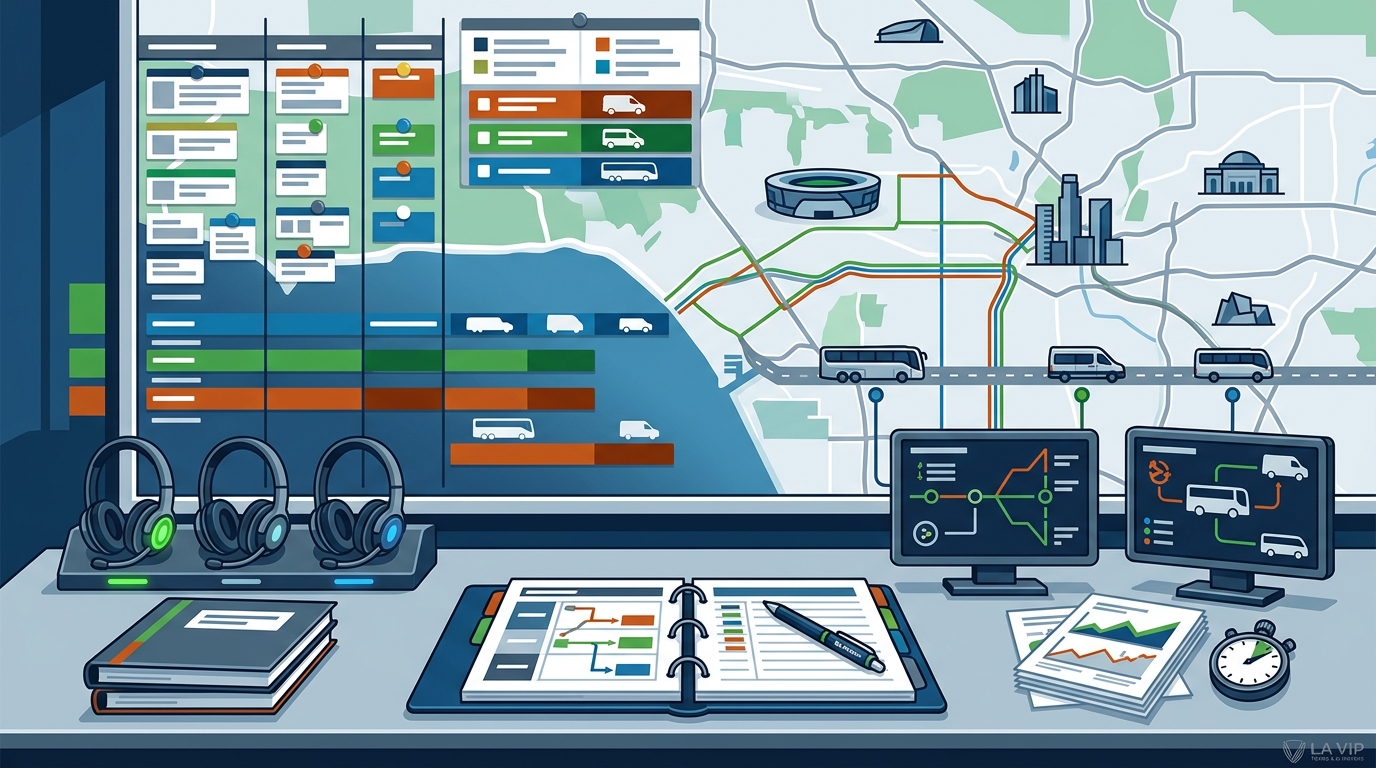
Greater Los Angeles presents unique routing challenges due to traffic density and geographic sprawl. Successful operators maintain dedicated dispatch teams that monitor real-time conditions and adjust schedules proactively. A dedicated dispatch team is a centralized coordination unit responsible for monitoring vehicle locations and updating itineraries. These teams utilize advanced routing software to identify alternative pathways when congestion occurs. Planners benefit from proactive communication rather than reactive problem solving. This operational model minimizes delays and keeps large groups on schedule.
Service coverage extends across Southern California to accommodate multi-destination corporate programs. Operators provide one-way transfers, round-trip shuttles, and multi-day excursion packages. Regional flexibility allows companies to coordinate events across Santa Barbara, Orange County, and San Diego. Direct routing eliminates transfer points and reduces the risk of missed connections. Organizations that secure comprehensive regional coverage experience fewer logistical complications. This geographic advantage translates directly into higher attendee satisfaction scores.
Service Integration and Event Logistics
Enterprise transportation requires seamless integration with broader event programming. A comprehensive event logistics package is a bundled service offering that coordinates transportation, scheduling, and on-site support. Planners benefit from single-point billing, unified communication channels, and consolidated reporting. Direct operators provide dedicated account managers who understand corporate compliance requirements. This streamlined approach reduces administrative friction and accelerates approval processes. Companies that integrate transportation early in the planning phase consistently achieve smoother execution.
Technology integration further enhances operational efficiency for modern corporate programs. Operators utilize digital booking platforms, real-time tracking, and automated confirmation systems. These tools provide planners with instant visibility into vehicle status and driver assignments. Event coordinators can modify pickup locations or adjust departure times without phone tag. This digital transparency reduces miscommunication and prevents costly scheduling errors. Organizations that leverage technology-driven logistics consistently report higher operational efficiency.
Comparing Vehicle Options for Enterprise Groups
Selecting the appropriate vehicle requires careful analysis of group size, itinerary complexity, and budget constraints. The following matrix outlines standard capacity ranges and feature sets for common enterprise deployments.
| Vehicle Category | Passenger Capacity | Key Amenities | Primary Use Case |
|---|---|---|---|
| 28 Passenger Luxury Mini Bus | Up to 28 | Climate control, USB charging, panoramic windows | Executive shuttles, networking events |
| 40 Passenger Luxury Mini Bus | Up to 40 | Leather seating, LED lighting, WiFi available | Mid-size conferences, venue transfers |
| 56 Passenger Motor Coach | Up to 56 | Reclining seats, luggage compartments, 110V outlets | Large conferences, multi-day excursions |
| ADA Minibus | Variable | Wheelchair accessibility, priority seating | Inclusive corporate programs |
Key Takeaways
- Direct fleet ownership eliminates marketplace fragmentation and guarantees operational accountability.
- Modern luxury mini buses provide executive seating, climate control, and integrated charging for groups up to forty attendees.
- Motor coaches support fifty-six passengers with reinforced safety systems and dedicated luggage compartments.
- Dedicated dispatch teams monitor real-time conditions and adjust routing to prevent congestion delays.
- Comprehensive regional coverage spans Southern California, enabling multi-destination corporate programs.
- Digital booking platforms and automated confirmations reduce administrative friction and scheduling errors.
- Direct employment models ensure consistent driver retention and predictable maintenance standards.
Frequently Asked Questions
How far in advance should corporate planners book charter vehicles?
Enterprise event coordinators should secure vehicle reservations at least ninety days before the scheduled date. This timeframe allows operators to allocate appropriate fleet capacity and confirm driver assignments. Peak conference seasons require even earlier booking to guarantee preferred routing windows. Early reservations also provide flexibility for itinerary modifications and venue changes.
What amenities are standard on luxury mini buses?
Standard amenities include climate control, panoramic windows, comfortable seating, and integrated power outlets. Operators frequently add WiFi access, LED lighting, and premium audio systems upon request. These features ensure passenger comfort during extended transit periods. Planners should verify specific equipment availability during the initial consultation.
Can operators accommodate last-minute schedule changes?
Dedicated dispatch teams monitor active itineraries and adjust routing when necessary. Direct operators maintain flexible scheduling protocols to accommodate venue shifts or extended meetings. Planners should establish clear communication channels to facilitate rapid adjustments. Proactive coordination minimizes disruption and keeps groups on schedule.
How do operators ensure driver compliance and safety?
Operators maintain current DOT certifications, conduct regular vehicle inspections, and enforce strict background checks. Certified commercial drivers complete continuous education on defensive driving and emergency response. Direct fleet management allows companies to audit maintenance records and verify compliance documentation. Transparent reporting builds trust and reduces liability exposure for corporate organizers.
What is the typical cost structure for corporate charters?
Pricing depends on vehicle capacity, route distance, and rental duration. Operators provide customized quotes based on specific itinerary requirements and service level expectations. Transparent billing eliminates hidden fees and simplifies expense reporting. Planners should request detailed proposals to compare value across providers.
Do operators provide multi-day excursion packages?
Yes, operators design multi-day programs that coordinate overnight routing, meal stops, and venue transfers. These packages include dedicated account managers who oversee daily logistics. Planners benefit from consolidated billing and unified communication channels. Comprehensive programming reduces administrative overhead and improves attendee experience.
How do companies handle accessibility requirements?
Operators maintain ADA-compliant vehicles equipped with wheelchair lifts and priority seating. These units ensure inclusive transportation for all attendees regardless of mobility status. Planners should specify accessibility needs during the initial consultation. Dedicated operators coordinate vehicle allocation to meet compliance standards.
Secure Your Corporate Transportation Partner
Enterprise event success depends on reliable logistics, modern fleet deployment, and direct operational accountability. Organizations that partner with experienced charter providers experience fewer delays, higher attendee satisfaction, and streamlined administrative processes. Contact the dedicated planning team to request a customized quote and secure your preferred vehicles. Visit the primary service portal to explore fleet options and schedule a consultation. Contact Us to begin coordinating your next corporate program.